Our Nation
We govern ourselves, we hold our own land, and we have been on this creek since long before there was a name for the state around us.
Who we are
We are a federally recognized Tribal Nation of just over 4,100 enrolled members, about 2,600 of whom live on or near our land. We govern ourselves under a Constitution adopted by our members, through a seven-member Tribal Council elected by the people.
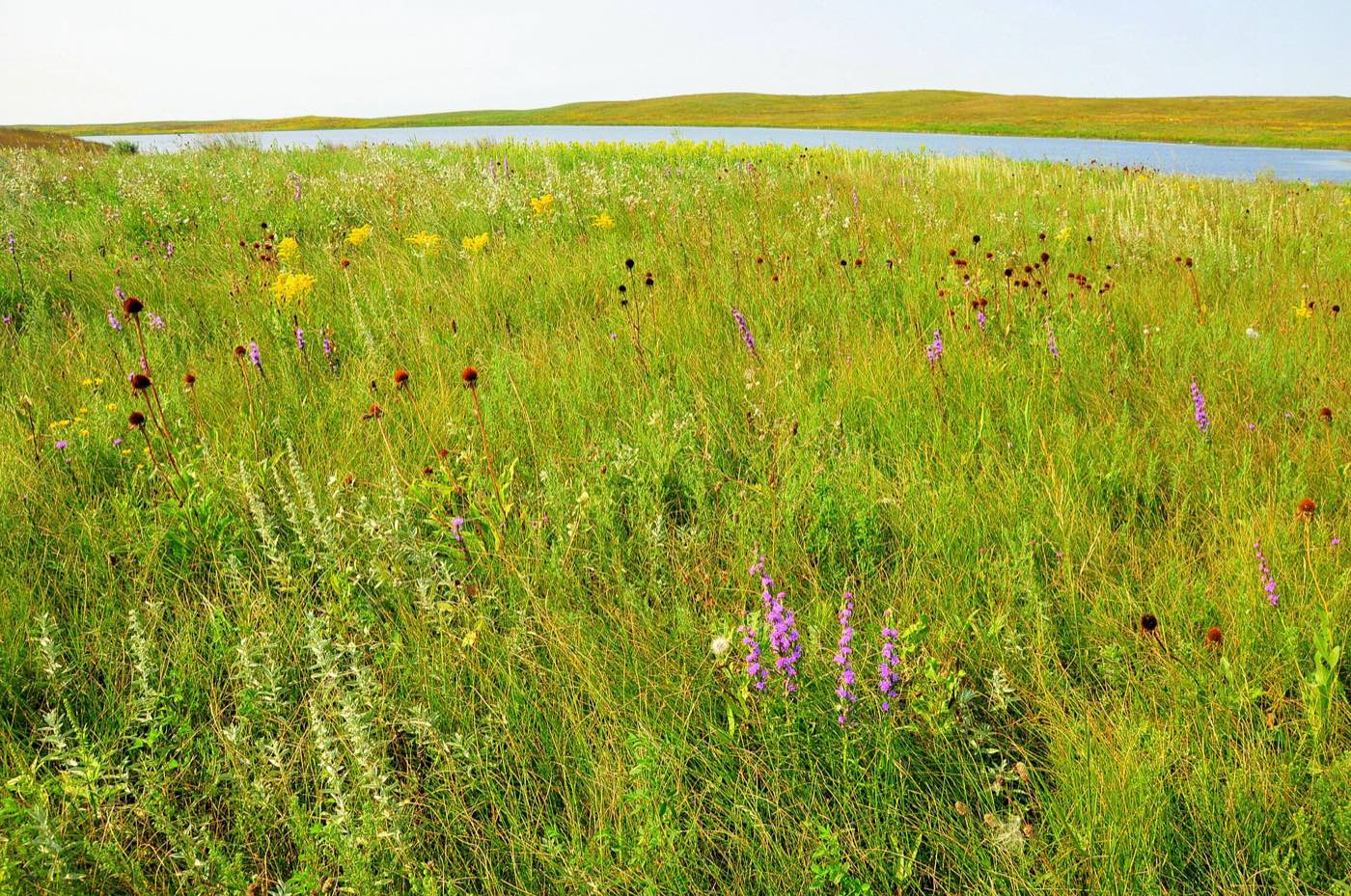
Our land runs along the creek and up onto the mixed-grass prairie above it, with the badlands ridges standing to the west. It is not a large land base. It is ours, we have never left it, and we are steadily buying back what was taken.
We are not a chapter in somebody else’s history book. We are a government, we are landowners, we are parents at the school at three o’clock.
Our language
Our language is spoken by a small number of first-language speakers, most of them elders, and by a growing number of second-language learners of every age. The Language Program runs community classes, an apprentice-speaker program that pairs learners with elders for a paid year of immersion, and an ongoing effort to record every speaker who is willing.
You will see our language throughout this website: in the name of the Nation, in the headings, and in the greeting on our homepage. That is deliberate. A Nation’s website should sound like the Nation.
A short history
The account below is brief on purpose. A Nation’s full history belongs to the Nation to tell, in its own words and its own order, and often with parts that are not for a website at all.
- Since time immemorial
Our people live along the creek and on the prairie above it, moving with the seasons between the river bottom and the high ground.
- 1868
A treaty is signed. It recognizes a homeland far larger than what we hold today, and it is never fully honored.
- 1889
The reservation is reduced. Land is opened to non-Indian settlement.
- 1891-1920
Allotment breaks the remaining land into individual parcels. "Surplus" acreage passes out of Tribal hands, and the checkerboard pattern we still live with is created.
- 1936
The Nation adopts a written Constitution and organizes an elected Tribal Council, while continuing to recognize its older ways of deciding together.
- 1975
The self-determination era begins. The Nation takes over administration of its own health, education and housing programs from the federal government.
- 1998
The Nation opens its own K-12 school and begins formal language instruction in the classroom.
- 2026
The Nation purchases 1,240 acres along the creek, reconnecting two separated tracts of Tribal land. The work of buying back the homeland continues.
This history is invented
The dates above follow the broad shape of federal Indian policy, from treaty to allotment, reorganization, self-determination, because nearly every Nation lived through those eras. But this particular Nation does not exist, and no part of this timeline describes real events or a real community.
The photograph at the top of this page is real public-domain prairie, standing in for scenery. The Nation shown here is invented, so it is not this Nation's land.
Where the language lives on this site
Every short underlined line on this website is a place the Nation's own language belongs. They are empty on purpose.
This demonstration does not contain a single word of any Indigenous language, and that is deliberate. We do not invent language, and we do not run words through a translator. Language comes from a Nation's own speakers.
What we do instead is build the room for it: the site name, the greeting on the homepage, every section heading, the tagline above the footer. Each of those places holds an empty line at the same size and weight as the English beside it. When a Nation supplies the words, they land in a design that was shaped around them from the start, not squeezed in afterward.
- Site name, every page
- Homepage greeting
- Every section heading
- Every page title
- Tagline above the footer